
Chromoplasticity: Why Some Evergreens aren't so Green in Winter
Winter is the time for appreciating the leafless forms of deciduous trees, their varying bark and forms, and perhaps wistfully thinking of warmer days when they color the world green. But careful not to spend too much of one season wishing for the next, enjoy the present, now is the time to admire our evergreens, the true jewels of the winter landscape in Newport. Though often relegated in the summer garden as a means to privacy or perhaps a windbreak, evergreens have far more to offer than simply being a living wall. The wide variety of species and cultivars available that thrive on Aquidneck Island is something to take advantage of, with seemingly endless combinations of texture, size, and color to be had. Contrary to their name, not all evergreens are truly ever green, and now, on these cold and sunny days of winter, is the best time to appreciate their seasonal show.
Winter brings different living conditions for all of us. For evergreens that maintain their light gathering leaves and needles year-round, it means having different adaptations to deal with those conditions. Taking a closer look at the evergreens around Newport now, in the throes of January, we will find that many have gained a new hue. While some remain beautifully dark green, like the dwarf Hinoki cypress (Chamaecyparis obtusa ‘Nana Gracilis’), others have faded to dull greens or more fully transformed, taking on tinges of bronze, gold, grey, and even sometimes purple. This color changing display, not unlike the colorful autumn senescence put on by our deciduous trees, or the distinctive curl of thermonasty seen in rhododendron leaves when temperatures dip below freezing, is a protective measure.
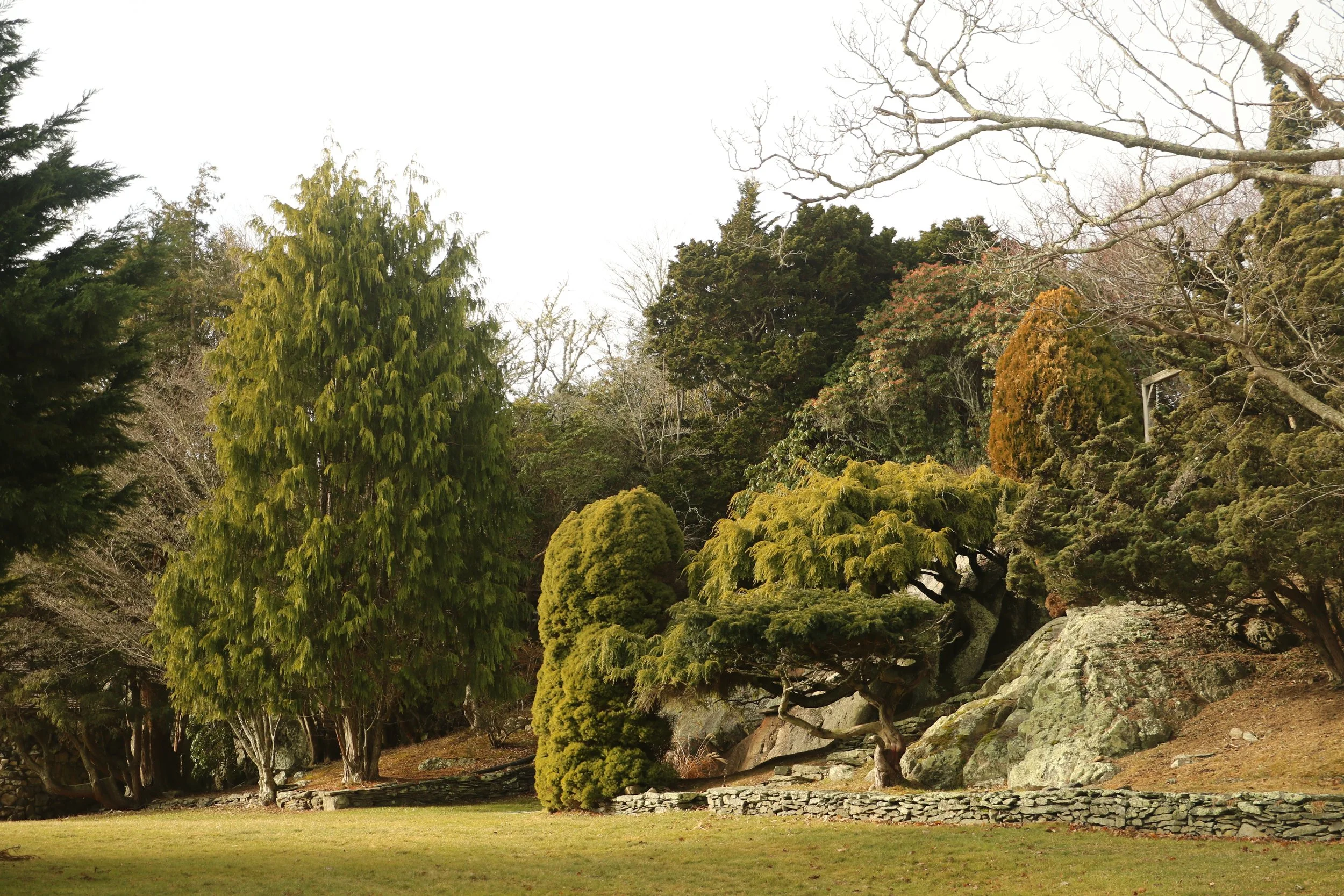
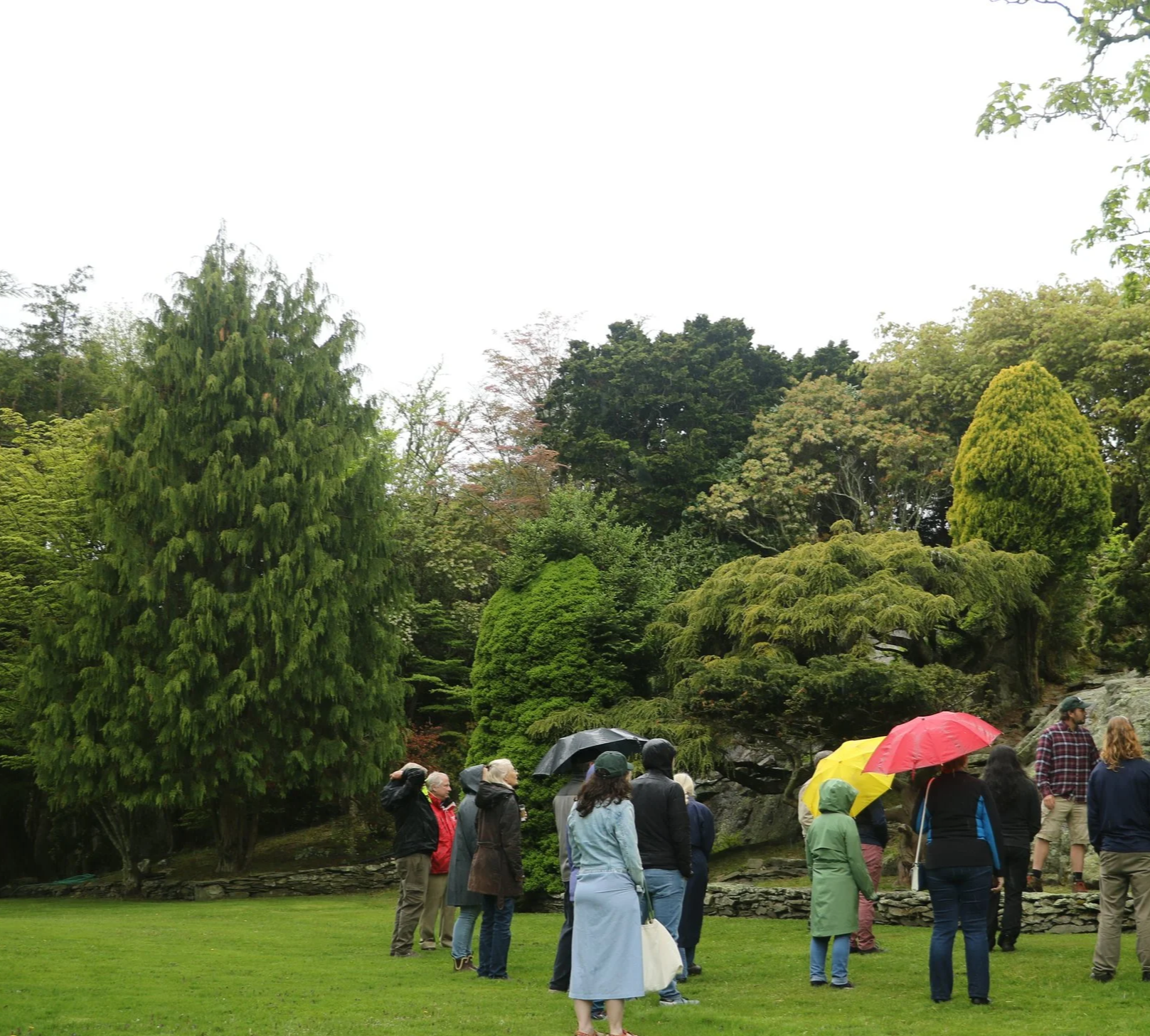
A comparison of the fantastic planting of evergreens on the rock outcrop of Wyndham Arboretum showing the difference in colors between January and May.
As temperatures drop, the enzyme processes involved in photosynthesis slow down, so to prevent damaging over-oxygenation within their system, evergreens essentially create their own sunscreen to prevent too much sunlight from being processed. Chloroplasts, the organelle responsible for photosynthesis and the familiar green color, are converted to chromoplasts, another organelle that specializes in the synthesis and retention of carotenoid pigments. These yellow, orange, and red pigments are more recognizable to us in the processes of fruit ripening. Just as an apple turns red faster on its sunnier side, evergreens exhibit their winter color changes more vibrantly where exposed to sunlight, so when you move aside the outer branches, their summer green colors may remain within the shade. Rather than in indicator of ripeness, the chromoplasts in evergreens are part of the xanthophyll cycle, a protective reaction within photosynthesis that prevents oxidative stress. It is the same cycle triggered by other stressors we might see in the summer, such as drought and heat, weather that will arrive again before you know it.
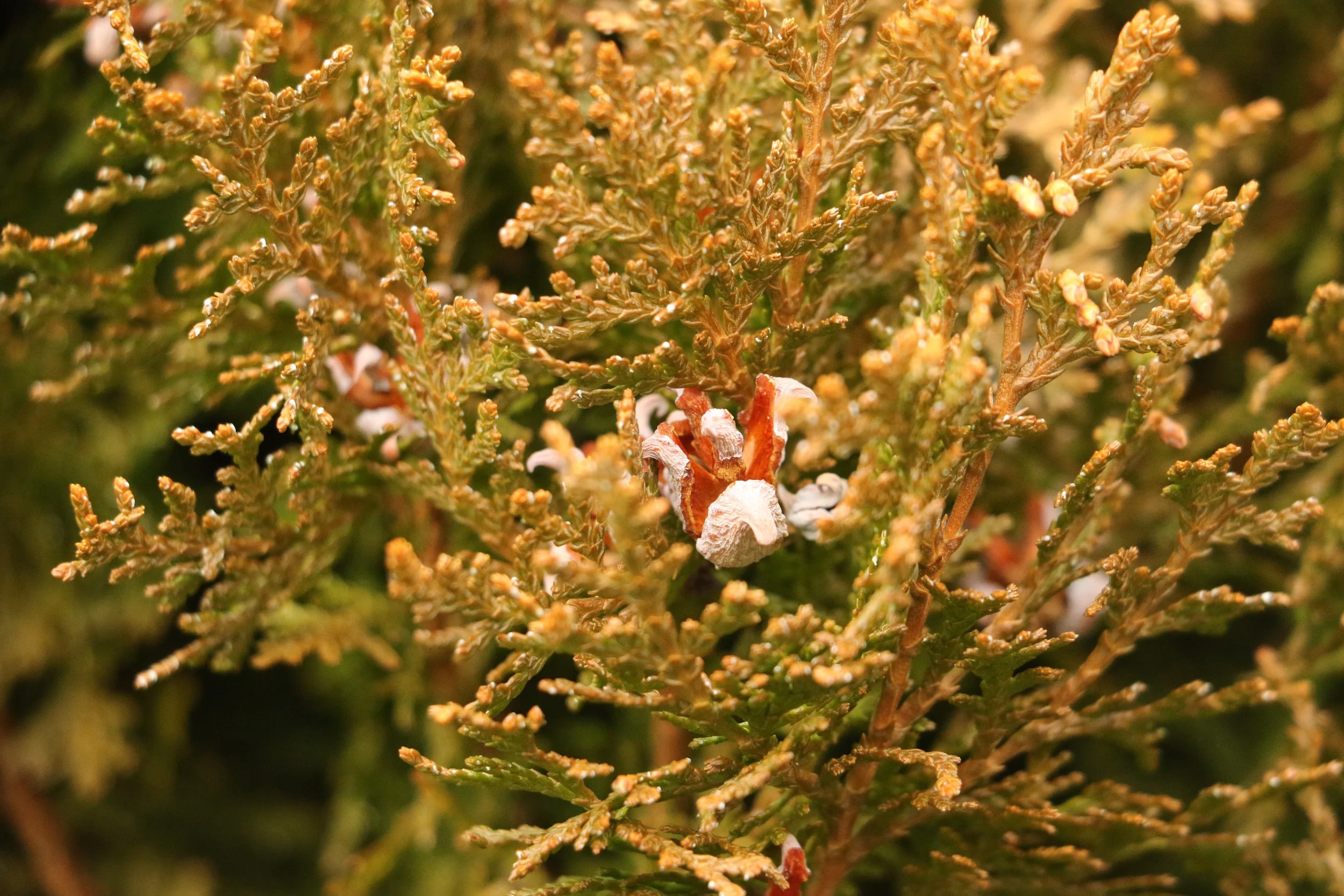
A close up of the bright orange winter display put on by an oriental arborvitae (Platycladus orientalis ‘Aurea Nana’)
Just as we put on our winter attire, wrapping our sensitive skin in layers of coats, hats, and scarves to protect our inner processes and comfort, the trees left out in all elements must do the same. Complex processes within must be deployed to protect from exposure of all kinds for trees, a necessity to survival when permanently rooted in one spot. Next time you bundle up, go and take a moment to appreciate the winter attire of Newport’s evergreens, the bronzing of once green Japanese cedar (Cryptomeria japonica), the bright orange hues of the oriental arborvitae (Platycladus orientalis ‘Aurea Nana’), the variable bronzes, blues, and purples of our native eastern red cedars (Juniperus virginiana), and a plethora of others dotting the landscape with their fleeting seasonal colors.
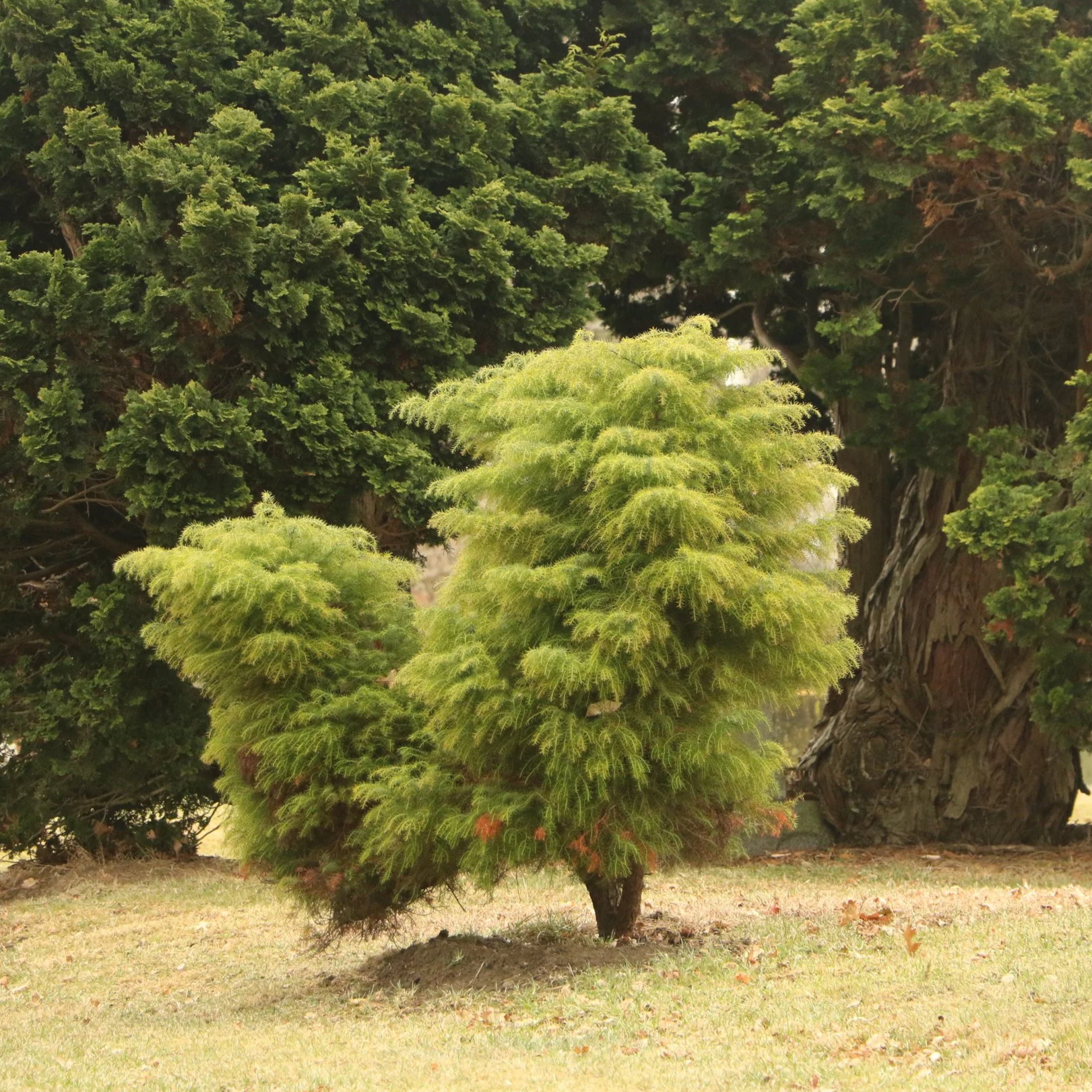
A winter display of chartreuse put on by Cryptomeria japonica 'Elegans Aurea' backed by the deep greens of two large dwarf Hinoki cypress (Chamaecyparis obtusa ‘Nana Gracilis’) in Island Cemetery.
— Morgan Palmer, Plant Production Manager
Contreras, Ryan N, et al. HORTSCIENCE 48(12):1452–1456. 2013. Chlorophyll, Carotenoid,and Visual Color Rating of Japanese-Cedar Grown in the Southeastern United States,2013, horticulture.oregonstate.edu/sites/agscid7/files/horticulture/attachments/contreras_chlorophyll_2013.pdf.Sadali, Najiah M, et al. “Differentiation of Chromoplasts and Other Plastids in Plants.” PlantCell Reports, U.S. National Library of Medicine, July 2019,pmc.ncbi.nlm.nih.gov/articles/PMC6584231/.