
Who’s behind the Name? Part III: Henry Hicks Magnolia
On one of the longest days of 2025, in the midst of grueling 90ºF plus temperatures and extreme humidity, my brother and I found ourselves strolling through a historic tree laden garden cemetery in northern Kentucky. Now, we weren’t in Louisville to view gardens, in fact my brother was quite apprehensive about wandering about in the heat to look at trees and shrubs. We were in the area to watch his favorite football club, Borussia Dortmund, play a couple of matches in the Club World Cup, and I had convinced him to check out nearby Cave Hill Cemetery when we weren’t cheering for BVB. After meeting with Head of Horticulture Sarah Schaffner to get some insight on the cemeteries’ many signature trees and garden features, we set our sights on finding the grave site of legendary boxer Muhammad Ali. On route to the famous burial, we happened upon a pair of beautiful blooming trees with glossy green foliage. As I pulled down a branch to smell the freshly opened flowers, my eyes turned to notice a green label on the sturdy trunk, which read “Henry Hicks Magnolia”.

NTC Living Colllections Manager Joe Verstandig (right) and his brother Tim, cheering on German soccer club Borussia Dortmund in Cincinnati, Ohio
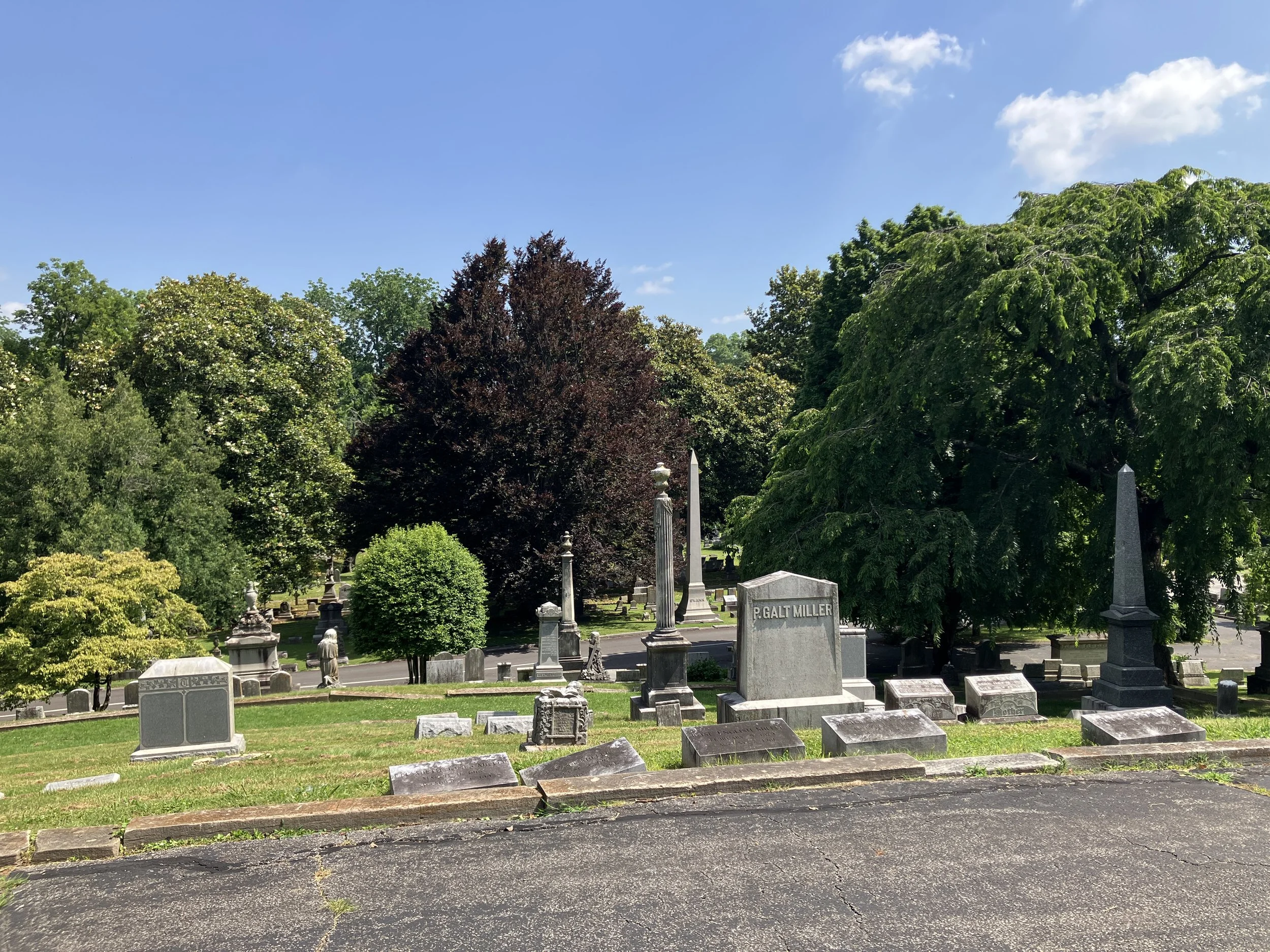
The diverse landscape of Cave Hill Cemetery in Louisville, Kentucky.
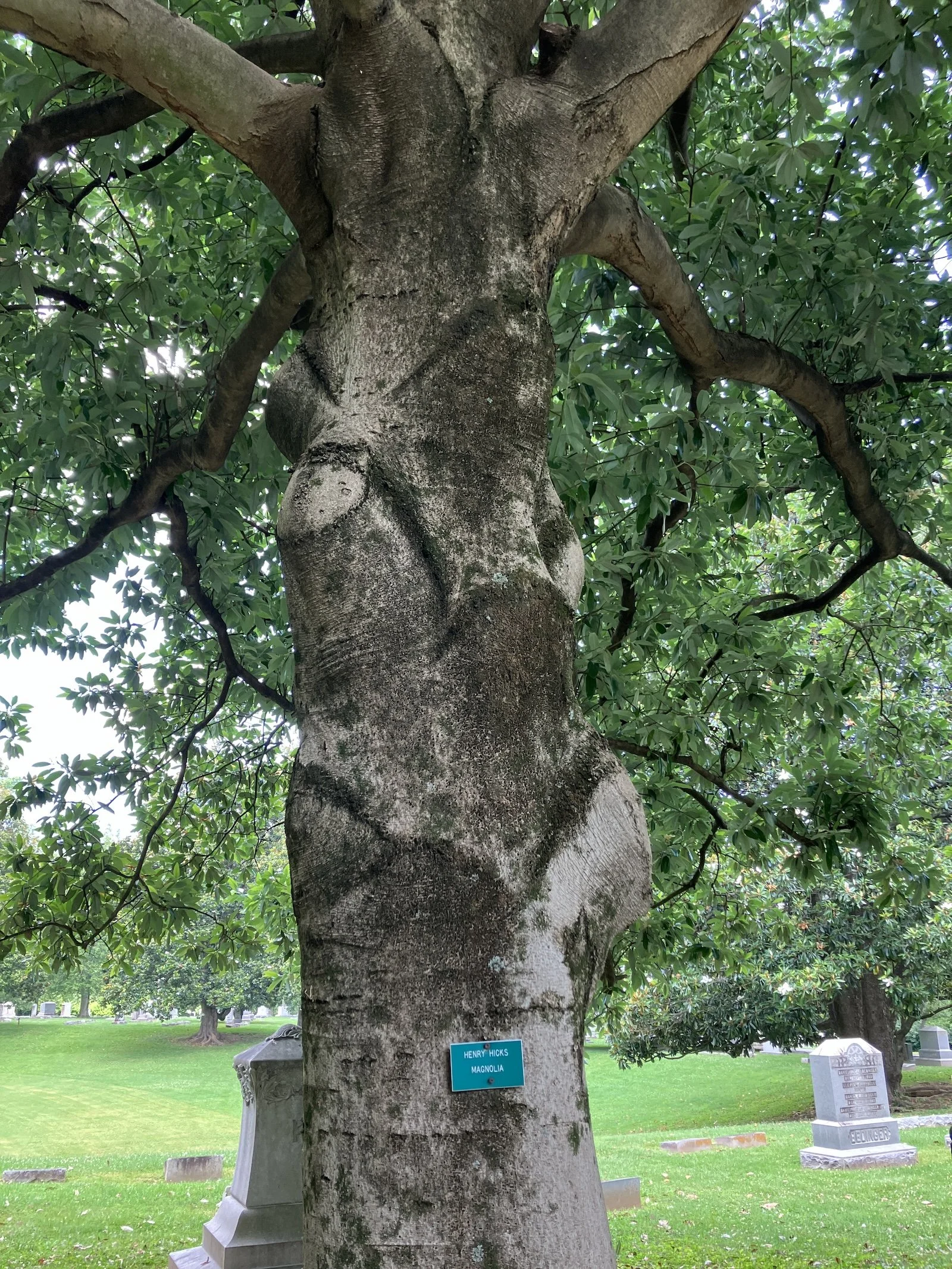
Smooth bark and large trunk of ‘Henry Hicks’ magnolia at Cave Hill Cemetery
I remember my old boss at Blithewold Gardens in Bristol, Gail Read, exclaiming her admiration for the wonderful lemon fragrance of ‘Henry Hicks’ Sweetbay Magnolia (Magnolia virginiana var. australis ‘Henry Hicks’). She grows the tree in her Barrington, RI garden next to her screened porch, and annually enjoys the cherished fragrance of the early summer blooms - a nice relaxing reprieve after a busy day of garden work! At Cave Hill, my brother and I were lucky enough to find the trees in peak bloom, happy as can be in the high heat of the early summer. Sweetbay, as the species is commonly known, is native to the coastal plain of the eastern United States, from Long Island (Massachusetts) to Florida, west to Texas. Although it is generally considered a small tree, the pair of ‘Henry Hicks’ at Cave Hill were over 30 feet tall and wide, with large trunks sporting smooth gray bark more reminiscent of a beech tree than a magnolia. Considering the growing conditions in Kentucky, my initial guess as to age of these magnolias was between 60 and 75 years old, at least. In the welcomed shade of these fragrant trees, I wondered not only the history of this noble pair of native magnolias, but the story of the man whose name appears on their tags.
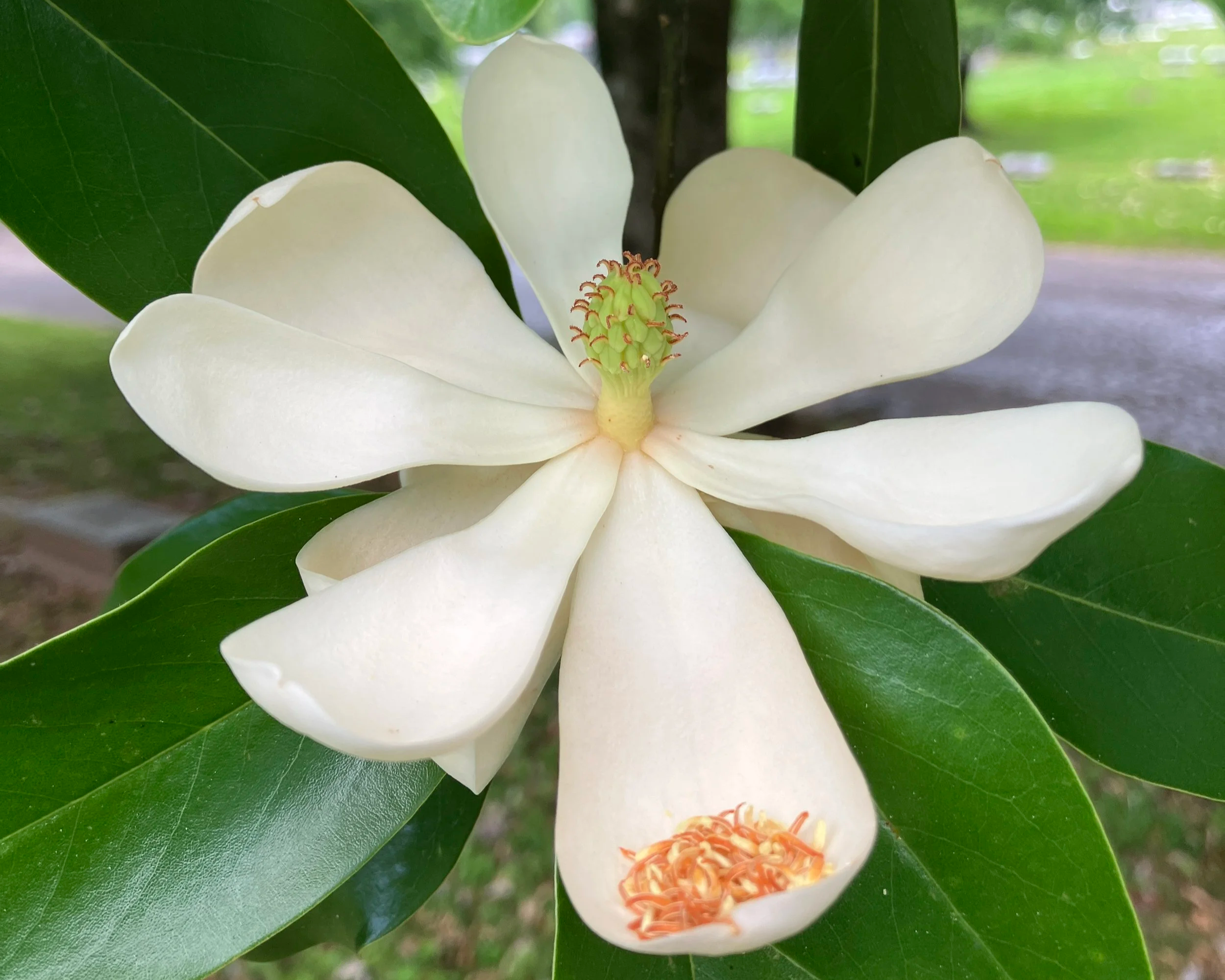
The wonderfully fragrant flower of ‘Henry Hicks’ magnolia at Cave Hill Cemetery
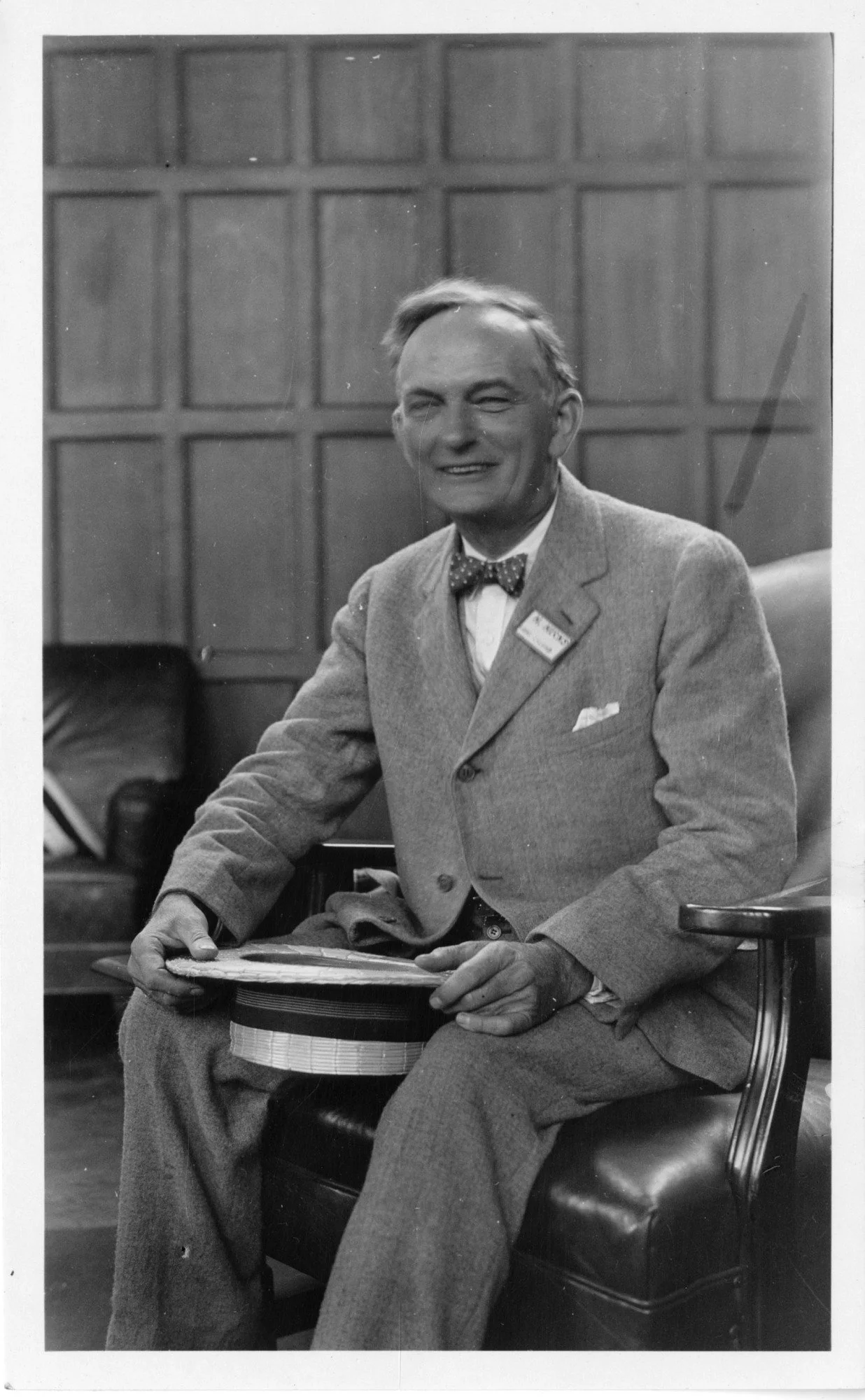
Legendary Long Island nurseryman Henry Hicks (1870 - 1954)
Born in Westbury, New York, in 1870, Henry Hicks was raised in a family of growers. After studying agriculture at Cornell - the first college trained horticulturist in the Hick’s family - Henry would step in as a third-generation nurserymen at Hick’s Nurseries in Westbury, Long Island. Henry’s grandfather, Isaac, established the nursery in 1853 when he began selling large specimen trees to his neighbors, and today the business flourishes as a premier Long Island garden center. A first-class plantsman, Henry Hicks made many connections in the world of horticulture, and was constantly experimenting with growing exotic plants from overseas he acquired through his relationships with plant explorers, arboreta curators, and other nurseryman. ‘Henry Hicks’ magnolia is not the only widely grown plant that bears the Hicks name. Hicks Hybrid Yew (Taxus xmedia ‘Hicksii’) was a seedling selected by Henry in the early 1900s at the nursery. This yew remains one of the most popular hedging plants for northern gardens well over 100 years after its discovery. Henry Hicks was an innovator in the nursery industry and became something of a local legend amongst his peers and customers. During his time at Hicks Nurseries, he expanded the operation from 16 acres to over 350, and employed an absurd 300 workers. He was a respected pillar in his community until his death in 1954.
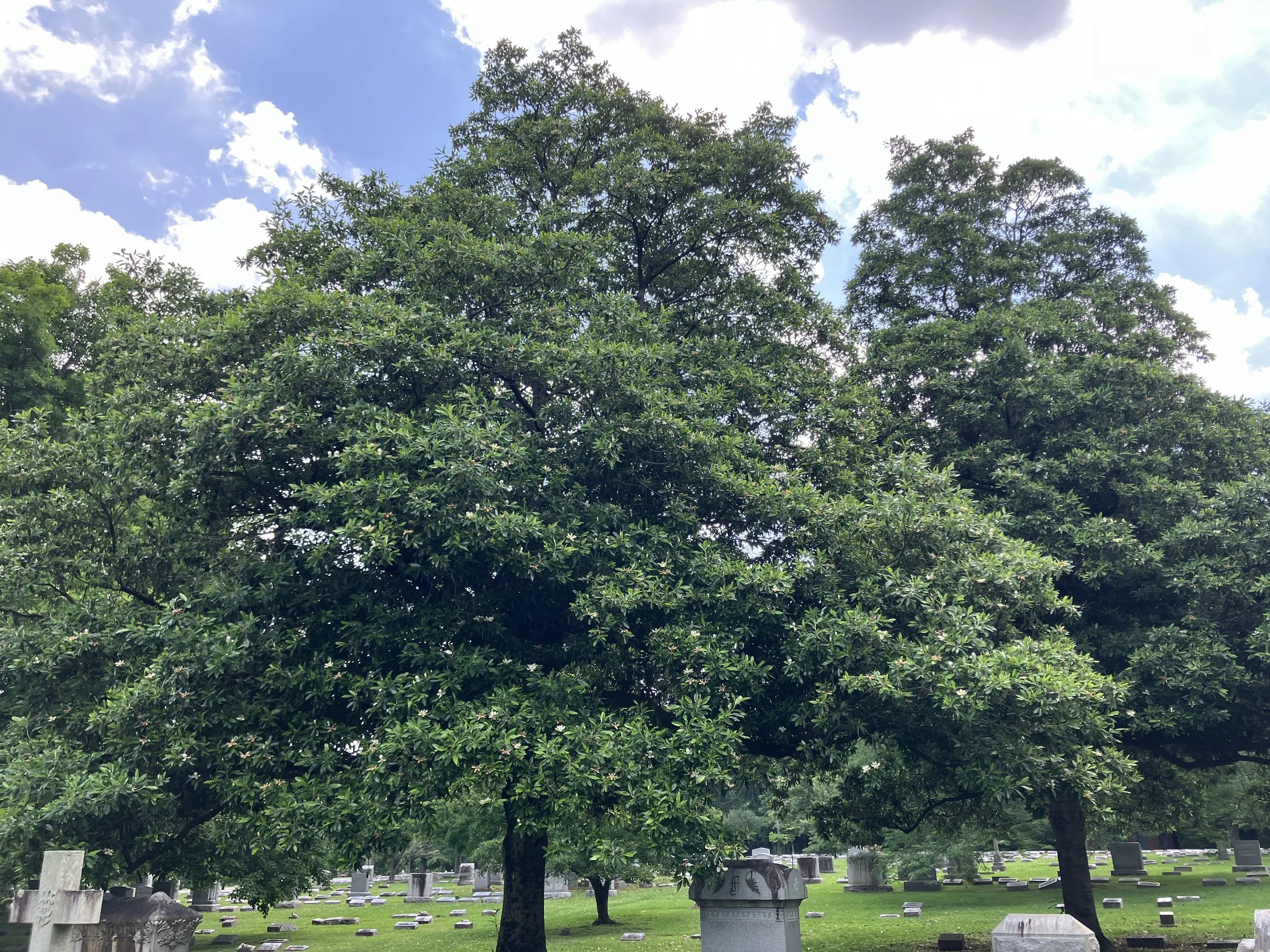
The pair of ‘Henry Hicks’ magnolias growing at Cave Hill Cemetery
As is usually the case when digging into the history of an important landscape plant, the story goes beyond the efforts of just one person. One of Henry Hick’s plant material companions was a man by the name of John Caspar Wister of Swarthmore, Pennsylvania. A graduate of Harvard’s school of Landscape Architecture, Wister was another leading figure in early 20th century horticulture, known for being the first director of the Arthur Hoyt Scott Arboretum of Swarthmore College, outside Philadelphia. Hicks would exchange many plants, particularly magnolias, with John Wister over the span of several years. Wister would receive the plant that would later be named ‘Henry Hicks’ in 1937, planted sometime later in the campus arboretum. At the time of writing, the original ‘Henry Hicks’ still grows in the Scott Arboretum’s magnolia collection, and is a very impressive specimen. A recipient of many recognitions and awards for his contributions to horticulture throughout his long career, Wister was involved in the development, research, and promotion of several plant groups, including rhododendrons, lilies, iris, and lilacs. Very well connected in the world of plants and gardening, Dr Wister, who received an honorary Doctor of Science degree from Swarthmore college, was an active member of nearly 50 horticultural societies, helping to start several of them.
Despite the botanical relationship between Hicks and Wister resulting in a sweetbay magnolia growing at the Scott Arboretum, if it wasn’t for the actions of another fabled plantsman, it’s very possible ‘Henry Hicks’ magnolia would not grace our gardens. Dr. John C. Wister certainly named the accession growing at Swarthmore ‘Henry Hicks’ after his late friend, but I’m not sure this would have happened if it wasn’t for magnolia expert and University of Illinois Professor Joseph C. McDaniel. ‘Henry Hicks’ is listed as being selected by McDaniel, likely impressed by the plant on a visit to Swarthmore College, and he wrote the first article mentioning the cultivar in the 1967 edition of “American Horticulture Magazine”. Based on his publications in the “International Plant Propagators Society Proceedings”, McDaniel helped distribute propagation material of ‘Henry Hicks’ to different nurseryman in the region. In the early 1970s, he reported on failed attempts to root cuttings by expert plant propagators, and the status of grafted clones at two different locations. Without McDaniel’s keen eye for magnolias, nursery connections, and knowledge of plant propagation, who knows if or when the tree would have been made available to the public. McDaniel, a founding member of the Magnolia Society, was prolific in his selection of superior forms of magnolia, which included plants like ‘Ballerina’, ‘Spring Snow’, and ‘Woodsman’. He was also the former president of Northern Nut Growers Association, and had a special interest in Paw Paw (Asimina triloba), a fascinating native fruit tree, of which he made several selections as well.
So, what is it about M. virginiana var. australis ‘Henry Hicks’ that so excited J.C. McDaniel and John C. Wister at Swarthmore College all those years ago, and continues to excite gardeners who grow and enjoy it today? The standout feature of the tree is its lustrous evergreen foliage - glossy green on top and silvery white on the underside - usually holding onto its leaves through the entirety of a typical southern New England winter. ‘Henry Hicks’ is reported to have remained evergreen even after -17ºF and is comfortably hardy in USDA Zone 5. A medium-sized tree, ‘Henry Hicks’ will grow to around 20 to 25 feet tall in Rhode Island gardens, but under good growing conditions, over 30 feet should be expected. For reference, I would now say, based on when ‘Henry Hicks’ was introduced, the happy Cave Hill trees are probably around 50 years old. The mature habit is pyramidal to broad-rounded, with a dense branching habit and delicately smooth bark. ‘Henry Hicks’ is a heavy bloomer, smothered with lemon scented, white, 11-tepaled flowers in June but often producing additional blooms through the summer. Attractive seed pods, or aggregates of follicles, split open to reveal ruby red seeds in the fall, which are feasted on by the birds. ‘Henry Hicks’, like other sweetbay magnolias, prefers fertile, acidic, well-drained soils but will grow admirably in swampy conditions. M. virginiana is a species that loves warmth, moisture, and plenty of sunshine for good flowering.
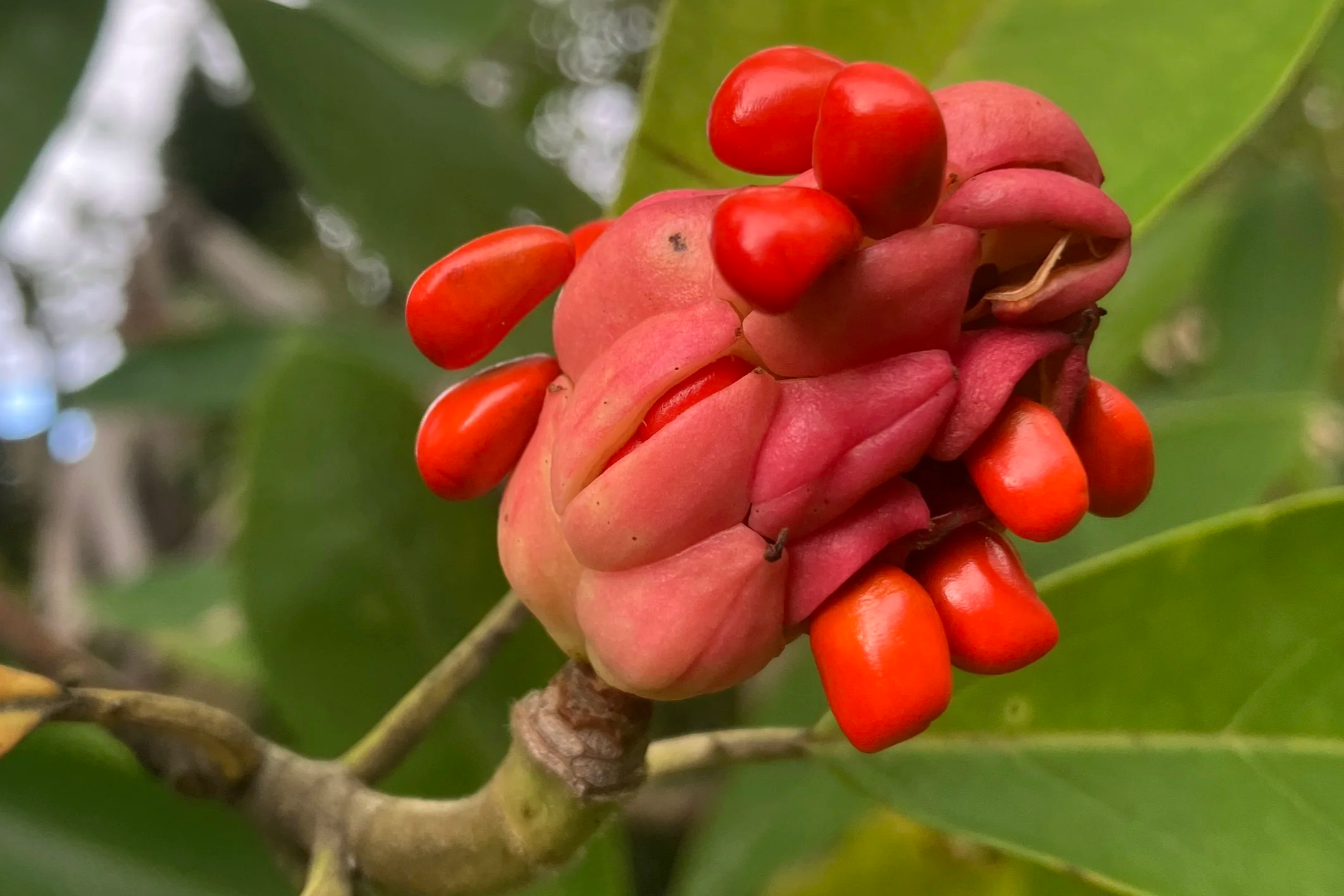
The red seeds of sweetbay magnolia splitting out of the aggregate of follicles in October.
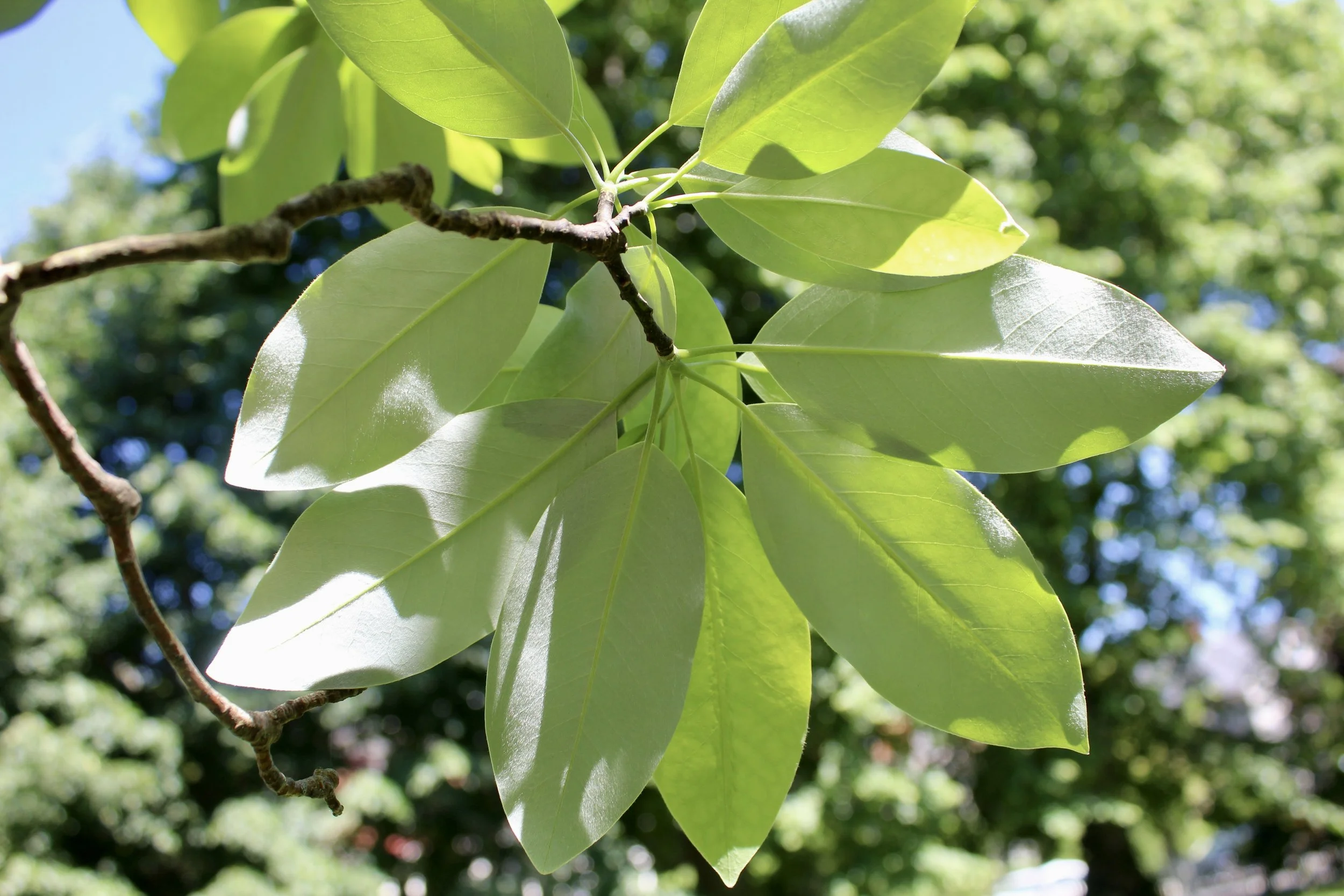
The silver underside of sweetbay magnolia leaves.
With the difficulties in propagating the tree from softwood cuttings, it took some time for ‘Henry Hicks’ to establish itself in commerce. Clonal propagation is best achieved by grafting, making the plant more expensive to produce. Over the years, more success has been had in rooting the magnolia from cuttings, thanks to modern advancements in the science of plant propagation. Today, the plant is not as widely grown as other sweetbay magnolia cultivars like ‘Green Shadow’ and Moonglow®, but it’s commonly available for sale from specialty nurseries. In the landscape, ‘Henry Hicks’ is never expected but always welcomed, like when I happened upon two mature trees in full bloom in a southern garden cemetery. Who would have thought?
As tree lovers, we are very appreciative of Henry Hicks, John C. Wister, and Joe C. McDaniel for, not only gifting our gardens a transcendent plant like this magnolia, but for all their significant contributions to the world of horticulture. The world would truly be a less colorful place without them.
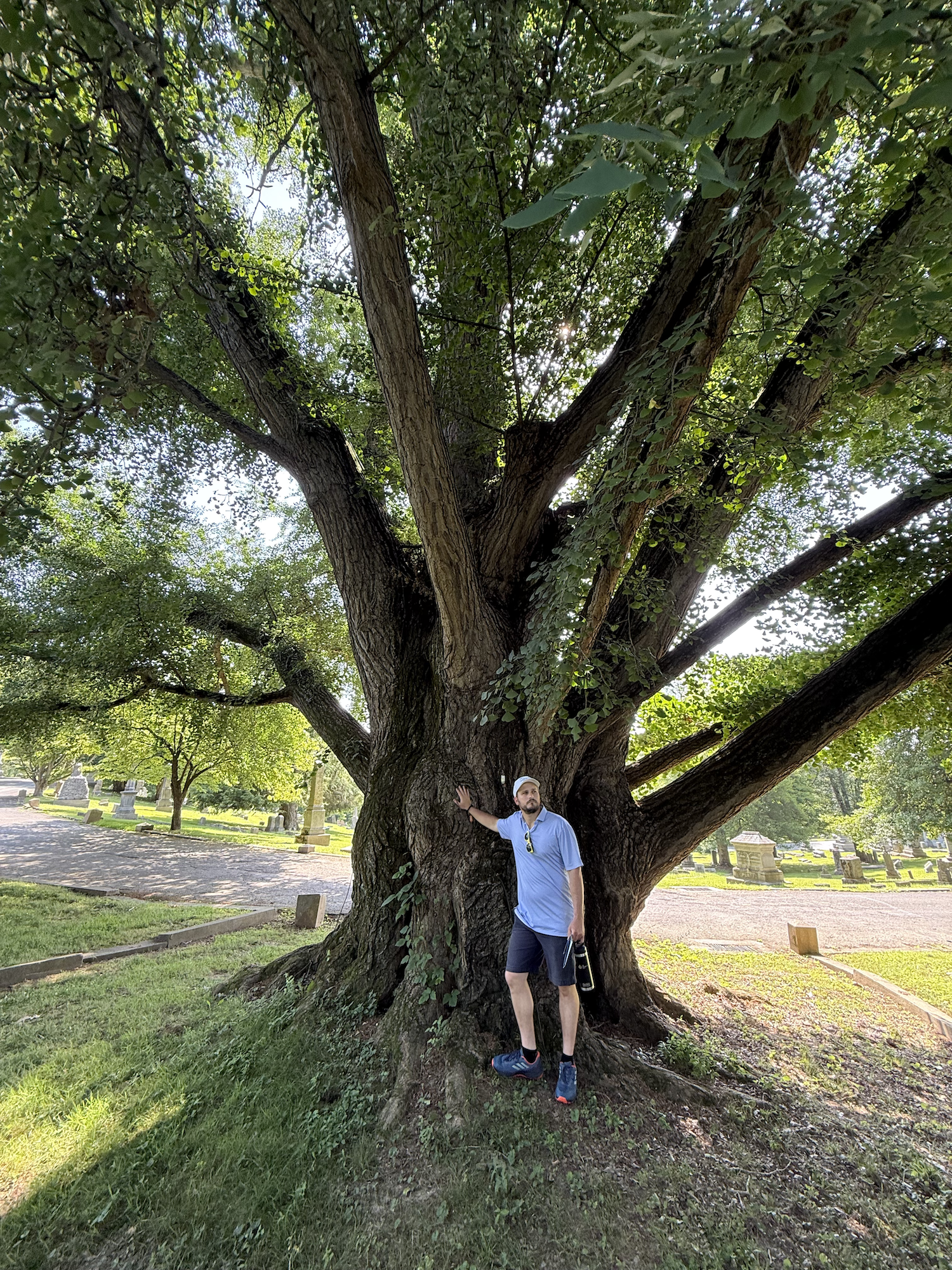
NTC Living collections Manager Joe Verstandig with a massive maidenhair tree (Ginkgo biloba) at Cave Hill Cemetery
Joe Verstandig – NTC Living Collections Manager
A special thank you to Matt Lobdell and Gail Read.
References
Lobdell, Matthew S. “Register of Magnolia Cultivars” Hort Science 56(12): 1614-1675. 2021
Dirr, M A. 2008. “Manual of Woody Landscape Plants” 6th Ed. Stipes, Champaign, Il.
Dirr, M A. & Warren, K. S. 2019. “The Tree Book”. Timber Press, Portland, OR.
Maurer, Rhoda. “Magnolia Collection at The Scott Arboretum of Swarthmore College.” Magnolia: The Journal of Magnolia Society International, vol. 45, no. 1, 2010, pp. 3–6.
McDaniel, J. C. “Two Cultivars for Upgrading Magnolia Virginiana Seedling Production.” Proceedings of the International Plant Propagators Society, vol. 20, 1970, pp. 200–02.
McDaniel, J.C. “Variety in Evergreen Magnolias.” Newsletter of the American Magnolia Society, vol. 9, no. 3, July 1973, pp. 3–6.
“Hicks in history” Hicksnurseries.com/about-us/
Stevens, J. “300 years of the Hicks Family” Record Pilot. Jan. 27, 1983
West, Franklin H. “John Wister and His Rhododendrons” Journal of the American Rhododendron Society.
Callaway, Dorothy. 1994. “The World of Magnolias”. Timber Press, Portland OR.
Photographs
Smithsonian Institution Archives, Accession 90-105, Science Service Records, Image No. SIA2008-3856