Rough Point Arboretum
Landscape History and Present Stewardship
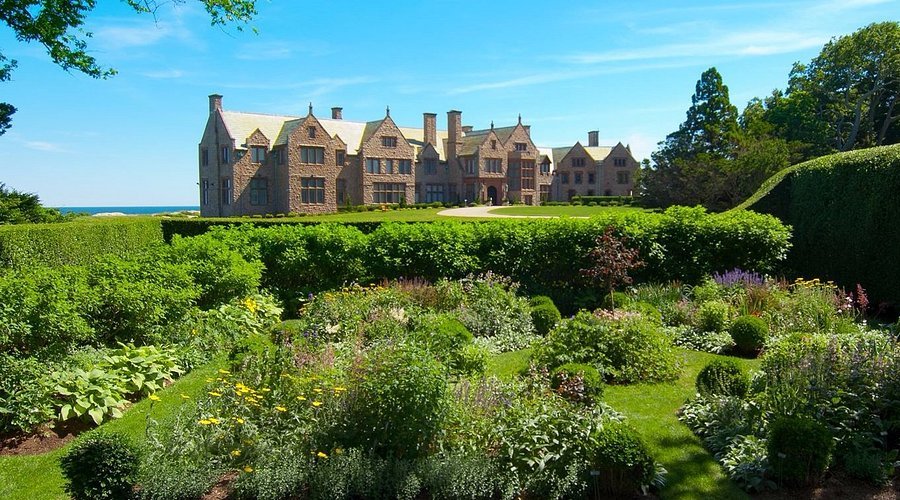
At the edge of Newport, where Bellevue Avenue meets the Atlantic, Rough Point occupies a demanding stretch of coastline. The 10.8-acre estate faces persistent wind, salt spray, seasonal storms, and hurricanes. Those conditions have shaped the property as surely as its owners, architects, and gardeners have. The landscape seen today is the result of more than a century of ambition, loss, adaptation, and care.
Rough Point Museum and its grounds are managed by the Newport Restoration Foundation with support from the Doris Duke Foundation. The property stands within the Bellevue Avenue Historic District, listed on the National Register of Historic Places, and welcomes approximately 20,000 museum visitors each year. Along its southern boundary, the Cliff Walk brings more than one million people past the estate annually. Together, the museum, grounds, and neighboring trail make Rough Point one of Newport's most visible historic landscapes.
A Landscape Before Rough Point
The history of this land begins long before the estate. Narragansett people inhabited Aquidneck Island for millennia before European contact. During the seventeenth century, conflict, disease, displacement, and enslavement devastated the tribe. The Narragansett Indian Tribe remains a federally recognized nation and continues to sustain its cultural identity.
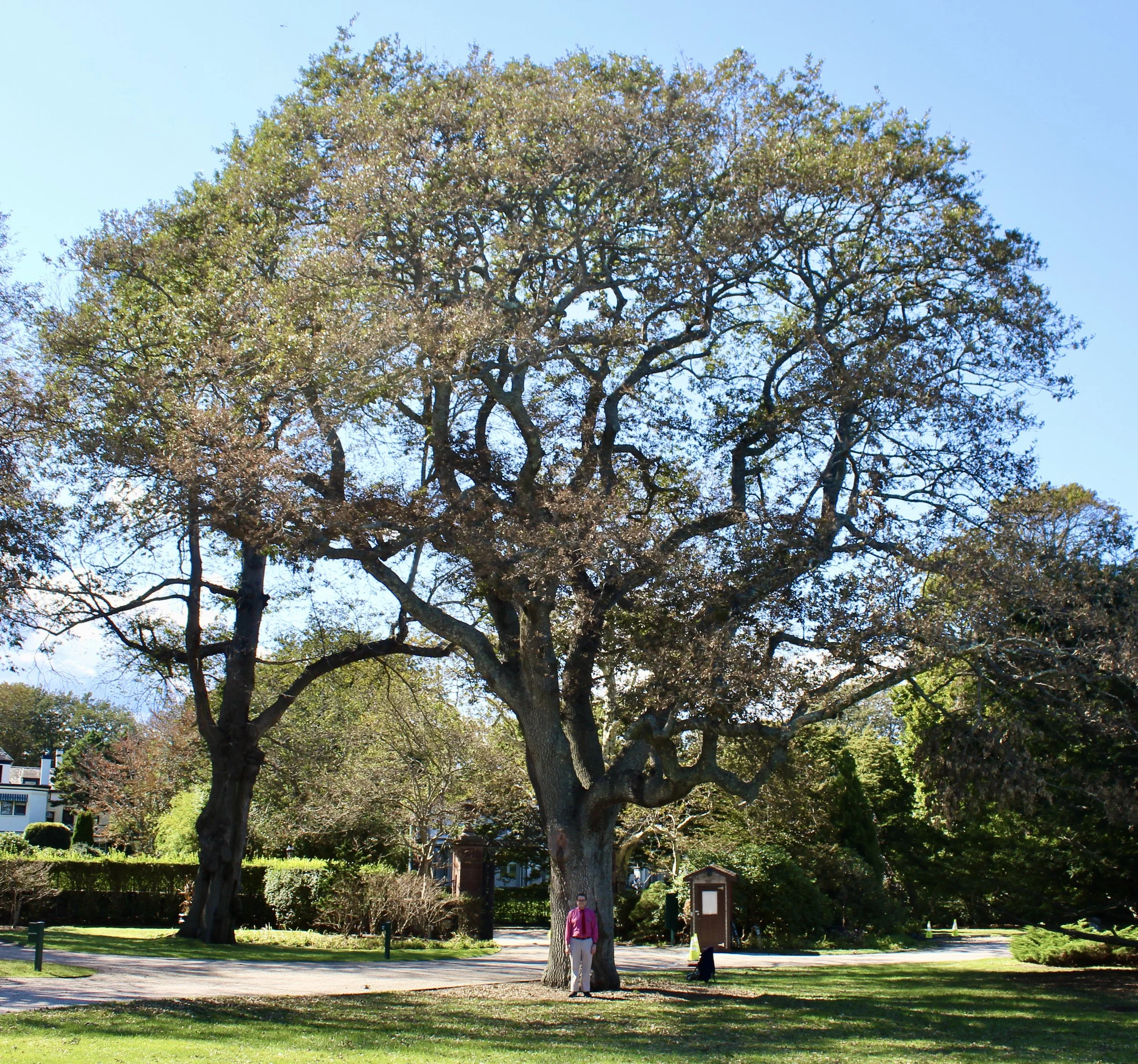
The documented ownership history of the present property begins in the nineteenth century, when the land was divided into northern and southern parcels. Between 1851 and 1864, the Cadwalader family owned the southern parcel and the Cleveland family owned the northern parcel. From 1864 to 1887, William W. Tucker held the northern lot and Jacob Dunnell the southern lot. During this period, a Turkey oak, also known as Turkish oak (Quercus cerris), was planted on the property. It still stands today. In 2010, the Rhode Island Tree Council's Champion Tree Registry recognized it as the second-largest specimen of its kind in the state.
The Vanderbilt Estate
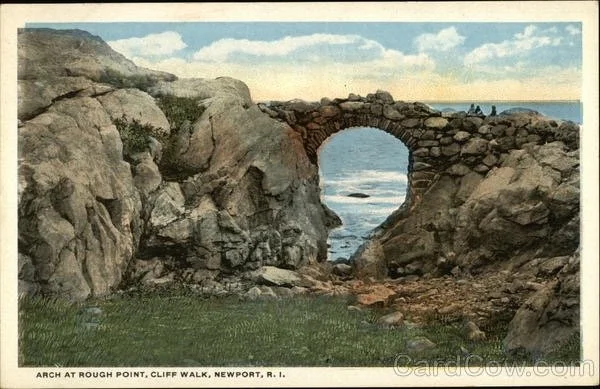
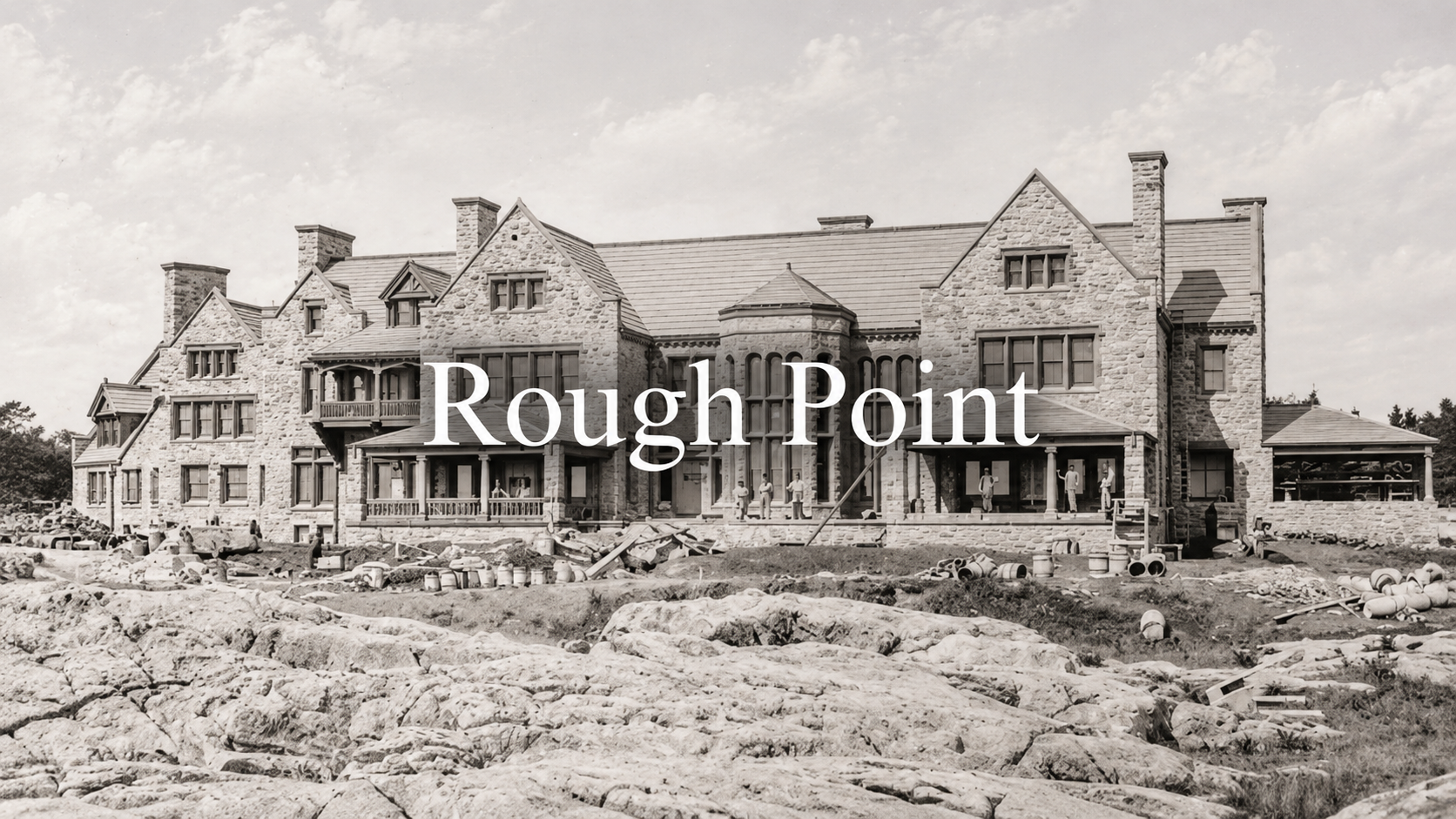
In 1887, Frederick W. Vanderbilt purchased the two parcels and joined them to create Rough Point. He hired the architectural firm Peabody and Stearns to design the house and Frederick Law Olmsted to shape the grounds. Their plans were developed and carried out between 1887 and 1901. Olmsted conceived the estate as an English manor set against a rugged coast, with the land rising and falling toward a dramatic bridge and ravine. At that focal point, the designed landscape met the natural force of the surf below.
Four elements of Olmsted's design remain legible: the rolling topography, the picturesque bridge and ravine, Pine Hill, and a remnant stand of trees in the property's northeast corner. The original landscape reportedly included approximately 30,000 plants. Dense planting helped shield vulnerable specimens from the wind while other plants became established, and some losses were anticipated from the beginning. Over the next 120 years, storms, constant exposure, and periods of limited maintenance took their toll. None of Olmsted's original plantings survives on the south side of the house. The principal surviving plants from his plan are European beeches (Fagus sylvatica) and wych elms (Ulmus glabra) in the northeast corner.
The Leeds Years
The Leeds family purchased Rough Point in 1906 and introduced a more formal layer to the grounds. They created a formal garden on a north-south axis and added spaces for tennis and lawn bowling in the northwest corner, near the area now used for staff parking. Their changes reflected the recreational life of an early twentieth-century Newport estate while adding a new geometry to Olmsted's picturesque setting.
The Duke Family and a Personal Garden
James B. and Nanaline Duke bought Rough Point in 1922. They enlarged the house with an east wing designed by Horace Trumbauer and reoriented the formal garden to the east-west alignment it retains today. James Duke died in 1925, only a few years after the family's arrival.
Hurricane Carol devastated Newport in 1954. In its aftermath, Nanaline and Doris Duke closed Rough Point and removed the contents of the house. They considered proposals for a long-term lease, but Doris ultimately chose to reopen the property. During the summer and fall of 1957, she moved much of the family's collection of paintings, porcelain, furniture, and textiles from New York to Newport and established Rough Point as her summer residence.
After Nanaline's death in 1962, Doris continued to shape the grounds. She planted trees and shrubs and created a rock garden near the ravine with sedums and Japanese black pines (Pinus thunbergii). Her choices do not appear to have followed Olmsted's original planting plan. Instead, they reflected her own tastes and the horticultural fashions of her time. Rhododendrons, yews, junipers, and other plants from Asia joined the foundation plantings around the house and appeared throughout the grounds.
Doris shared her father's interest in gardens and horticulture, and the landscape was carefully maintained during her years at Rough Point. Each year she prepared a plant list, and every spring new specimens arrived from Duke Farms in Hillsborough, New Jersey. Some, including her beloved rhododendrons, struggled in the exposed coastal environment. Others survived where the house or privet hedges offered protection.
One story remembered by a former gardener captures both Doris's determination and the limits imposed by the site. When the Redwood Library planned to remove a mature European beech, Doris arranged for her grounds crew to dig it up, carry it south along Bellevue Avenue on a flatbed truck, and replant it just east of the formal garden entrance. The ambitious effort could not overcome the exposure. The tree survived for only about two years.
From Private Estate to Public Stewardship
Rough Point was only one part of Doris Duke's commitment to preservation and horticulture. Concerned by the rapid demolition of eighteenth-century buildings along Newport's Thames Street waterfront and in the Historic Hill neighborhood, she founded the Newport Restoration Foundation in 1968. The new organization helped broaden the city's preservation movement and has saved more than 100 eighteenth- and early nineteenth-century houses. Four years earlier, Duke had opened Duke Gardens at Duke Farms, a series of greenhouses containing plants from around the world.
After Doris Duke's death in 1993, the Doris Duke Foundation was established to carry forward her philanthropy and provide for public enjoyment of her three estates: Rough Point, Duke Farms, and Shangri La, now the Shangri La Museum of Islamic Art, Culture and Design. Rough Point came under the stewardship of the Newport Restoration Foundation, which now cares for the estate as both a historic property and a public landscape.
Caring for Rough Point Today
The Newport Restoration Foundation expanded its landscape program in 2024 by hiring a landscape curator to guide stewardship across more than seventy properties. That same year, the Foundation formed a cross-departmental Grounds Committee. The committee supports the historic Olmsted landscape at Rough Point, considers the legacy of Doris Duke's gardens, and recommends ways to protect landscapes throughout the Foundation's portfolio.
This work joins historic preservation with climate resilience. The Foundation is developing goals to increase permeable surfaces and tree canopy across its properties. The landscape curator leads the strategic planning process, facilitates monthly Grounds Committee meetings, prepares the annual landscape budget, and recommends capital projects. Rough Point, the Foundation's principal historic property open to the public, provides a natural setting in which to share this work.
In 2026, the Foundation is advancing planting research at Rough Point and developing a coastal plant palette. Olmsted's original plant list, Doris Duke's annual lists, and current research will be considered together when selecting species and planting locations. The aim is to retain the landscape's historic character while choosing plants capable of meeting present and future coastal conditions.
The NRF Strategic Landscape Plan brings this work into a single framework centered on stewardship and sustainability, organizational coordination, historic landscape preservation, community engagement, and sustainable funding. Current initiatives include a three-year cycle of landscape surveys begun in 2025, expansion of the urban tree canopy through partnership with the Newport Tree Conservancy, public education about sustainable care of gardens and landscapes, and the development of Rough Point as a center for coastal climate resilience.
Rough Point's Olmsted landscape is well documented, but its principal planning documents now require revision. Updating the 2002 Cultural Landscape Report and the 2009 Cultural Landscape Maintenance Plan will allow current research and climate-resilience recommendations to guide future decisions. ArbNet accreditation as a coastal arboretum, pursued in partnership with the Newport Tree Conservancy, will further support education about resilient coastal landscapes, protection of historic features and specimen trees, and collaboration across the Newport community.
Maintenance and Long Term Care
The Newport Restoration Foundation's grounds crew provides daily care and monitoring at Rough Point. The head grounds manager directs this work and coordinates specialized contractors when needed. Casey Tree performs large-tree pruning and removals, while Bartlett Tree Experts conducts annual assessments and necessary treatments. The Grounds Committee receives monthly reports on tree care and removals, keeping significant decisions connected to the broader stewardship plan.
The committee also provides continuity for the landscape. Its members represent donor engagement, education and community outreach, grounds management, preservation, and visitor engagement. They review proposed alterations, improvements, plant selections, aesthetic decisions, and landscape-protection policies. Education, events, and public programs are considered in relation to the landscape's history, staff capacity, and the protection of historic features and specimen trees. The committee is also responsible for renewing Rough Point's ArbNet accreditation every three years.
A Landscape Open to the Community
Rough Point's landscape is not preserved as a private backdrop. It is a place where visitors can experience the history of Newport horticulture and see the practical challenges of caring for a coastal estate. Admission to the museum and grounds is free for Newport residents, and access to the grounds is free for all visitors. Seasonal hours and winter closures vary, so visitors should consult the official Rough Point website before arriving.
Self-guided visits are complemented by seasonal staff-led tours that interpret the estate's landscape history and horticulture. The Foundation's education and community engagement staff and visitor engagement team also create programs for local school groups of all ages. Partnership with the Newport Tree Conservancy adds opportunities for tree walks, public programs, and shared learning.
Rough Point's future depends on the same forces that have shaped it from the beginning: human intention and a powerful coastal environment. Its next chapter will not recreate a single moment in the estate's history. Instead, careful research, thoughtful planting, and long-term stewardship will allow the landscape to remain recognizable, resilient, and open to the public.